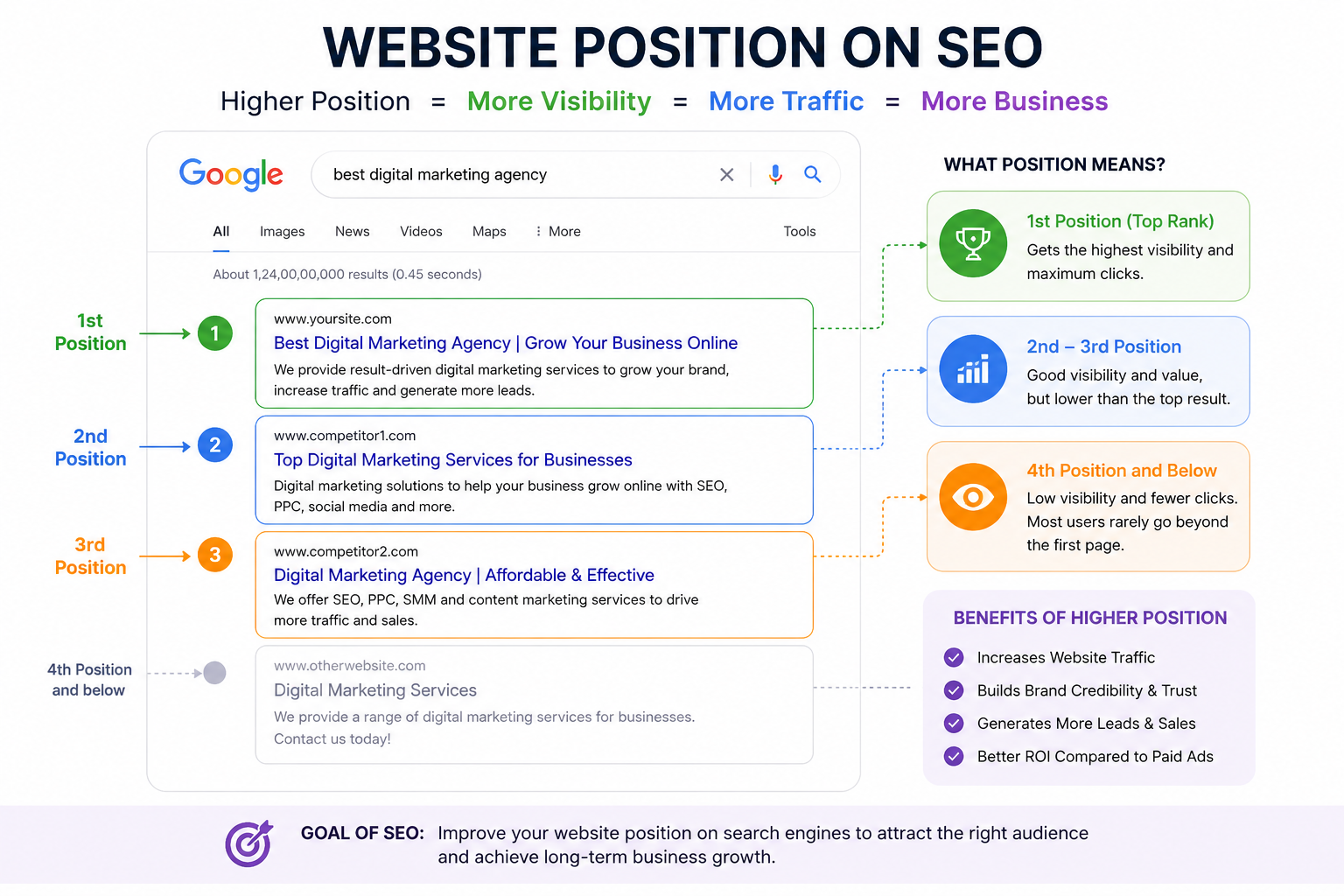
SEO (Search Engine Optimization) is the process of improving a website so that it appears higher in search engine results when people search for relevant information, products, or services. The main goal of SEO is to increase a website’s visibility, attract more visitors, and generate leads or sales without paying for advertisements.
For example, if someone searches for “best digital marketing course” on a search engine, websites that have strong SEO practices are more likely to appear on the first page of results.
Why is SEO Important?
In today’s digital world, millions of websites compete for attention. SEO helps businesses:
- Increase website traffic organically.
- Build trust and credibility.
- Improve user experience.
- Generate quality leads.
- Increase brand awareness.
- Achieve long-term online growth.
Unlike paid advertising, SEO can continue bringing visitors to a website for months or even years after content is published.
Key Components of SEO
1. On-Page SEO
On-page SEO focuses on optimizing elements within a website, including:
- High-quality content
- Proper use of keywords
- Meta titles and descriptions
- Heading tags (H1, H2, H3)
- Internal linking
- Image optimization
2. Off-Page SEO
Off-page SEO involves activities outside the website that improve authority and trustworthiness, such as:
- Building backlinks
- Social media promotion
- Brand mentions
- Online reviews
3. Technical SEO
Technical SEO ensures that search engines can easily crawl and index a website. Important factors include:
- Website speed
- Mobile responsiveness
- Secure HTTPS connection
- XML sitemaps
- Structured data
- Clean URL structure
Benefits of SEO
✔ Higher search engine rankings
✔ Increased organic traffic
✔ Better user experience
✔ Higher conversion rates
✔ Cost-effective marketing strategy
✔ Long-term business growth
Challenges of SEO
While SEO offers many advantages, it also comes with some challenges:
- Results take time to appear.
- Search engine algorithms change frequently.
- Competition can be intense.
- Continuous optimization is required.
SEO in the AI Era
With the rise of Artificial Intelligence, SEO has evolved significantly. Search engines now focus more on:
- Content quality and relevance
- User intent
- Expertise and credibility
- Helpful and original content
- Natural language understanding
Modern SEO is no longer just about keywords. It is about creating valuable content that genuinely helps users solve problems and find answers.
Conclusion
SEO is an essential digital marketing strategy that helps websites attract visitors, improve online visibility, and grow organically. By combining quality content, technical optimization, and a user-focused approach, businesses can achieve sustainable success in search engine rankings and stay competitive in the AI-driven digital landscape.